


Choosing frames is often the most exciting part of buying glasses—but lenses are where the real work happens. The right lenses determine how clearly you see, how comfortable your eyes feel, and how well your eyewear fits your lifestyle.
Understanding the different types of lenses available helps you make informed decisions rather than relying on guesswork.
Why Lenses Matter More Than You Think
Two people can wear identical frames and have completely different visual experiences based solely on lens choice. Factors such as screen use, outdoor exposure, driving habits, and reading distance all influence which lenses are most suitable.
Selecting the correct lenses improves:
-
Visual clarity
-
Eye comfort
-
Productivity
-
Long-term eye health
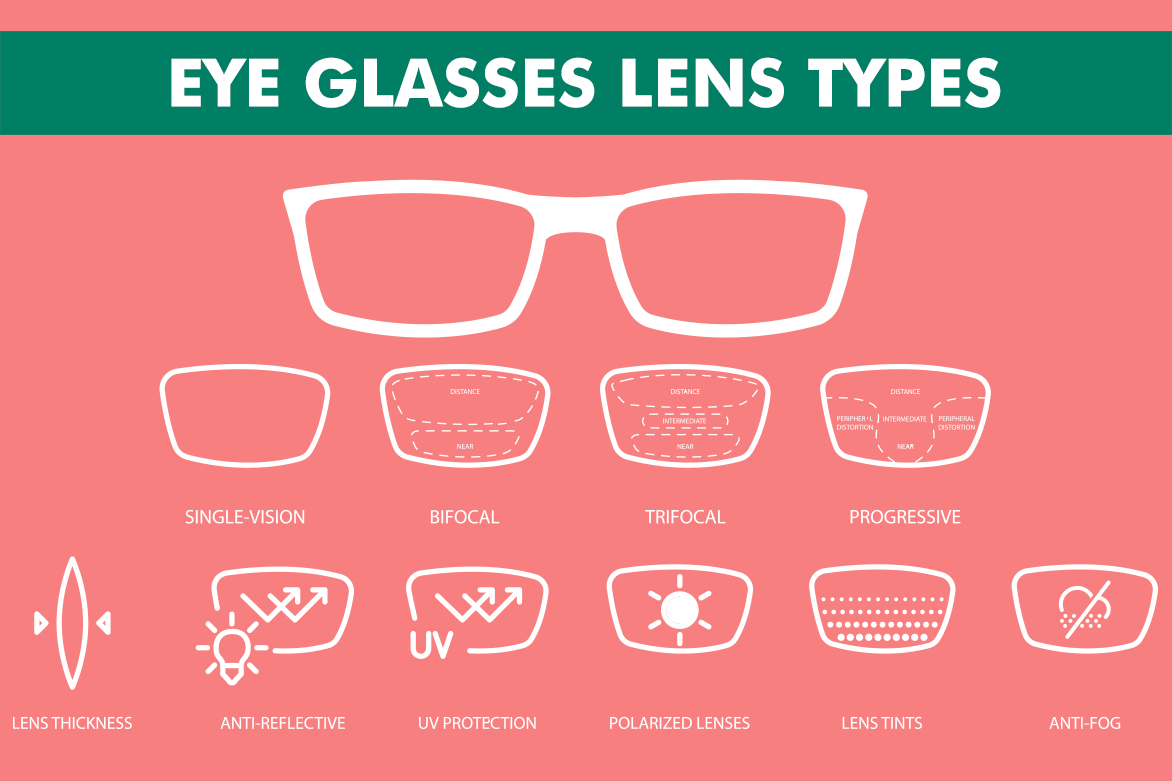
1. Single Vision Lenses
Single vision lenses are the most common type and are designed to correct one field of vision:
-
Distance (driving, outdoor viewing)
-
Near (reading, phone use)
They are suitable for people who need correction for only one visual range.
Best for:
-
Students
-
First-time glasses wearers
-
Individuals with straightforward prescriptions
2. Reading Lenses
Reading lenses are designed specifically for near tasks such as reading books, using phones, or working on documents.
They are typically recommended for people experiencing difficulty focusing on close objects, especially with age-related vision changes.
Important note:
Reading lenses are not intended for distance vision and should not be used while driving or walking.
3. Bifocal Lenses
Bifocal lenses contain two distinct optical zones:
-
Upper portion for distance
-
Lower portion for near vision
They provide a clear solution for people who need correction at two distances without switching glasses.
Considerations:
-
Visible dividing line
-
Adjustment period when first worn
4. Progressive Lenses
Progressive lenses offer a smooth transition between distance, intermediate, and near vision—without visible lines.
They are a popular modern alternative to bifocals and trifocals.
Benefits include:
-
Natural-looking lenses
-
Seamless vision at all distances
-
Convenience of one pair of glasses
Ideal for:
-
Professionals
-
Frequent readers and screen users
-
People who want all-in-one visual correction
5. Blue Light Filtering Lenses
With increased screen exposure, blue light filtering lenses have become essential for many users. These lenses reduce exposure to high-energy visible light emitted by digital screens.
They help with:
-
Reducing eye strain
-
Improving visual comfort
-
Minimizing screen-related fatigue
They are particularly useful for people who spend long hours on computers or phones.
6. Photochromic (Transition) Lenses
Photochromic lenses adapt to light conditions by darkening outdoors and clearing indoors.
Advantages:
-
Convenience
-
UV protection
-
Reduced need for separate sunglasses
They are ideal for people who move frequently between indoor and outdoor environments.
7. Lens Coatings That Make a Difference
Lens performance is enhanced by coatings such as:
-
Anti-reflective coating for reduced glare
-
Scratch resistance for durability
-
UV protection for eye safety
These coatings improve comfort, appearance, and longevity.
How to Choose the Right Lenses
The best lens choice depends on:
-
Your daily activities
-
Screen usage
-
Driving habits
-
Reading frequency
-
Personal comfort preferences
A professional eye consultation ensures your lenses are tailored to your lifestyle—not just your prescription.
Final Thoughts
Great vision is not just about seeing clearly—it’s about seeing comfortably and effortlessly throughout the day. Choosing the right lenses transforms how your glasses perform and how your eyes feel.
Investing time in understanding your lens options ensures you get eyewear that truly works for you.